They Packed a Carry-On for Six Months and Never Came Back
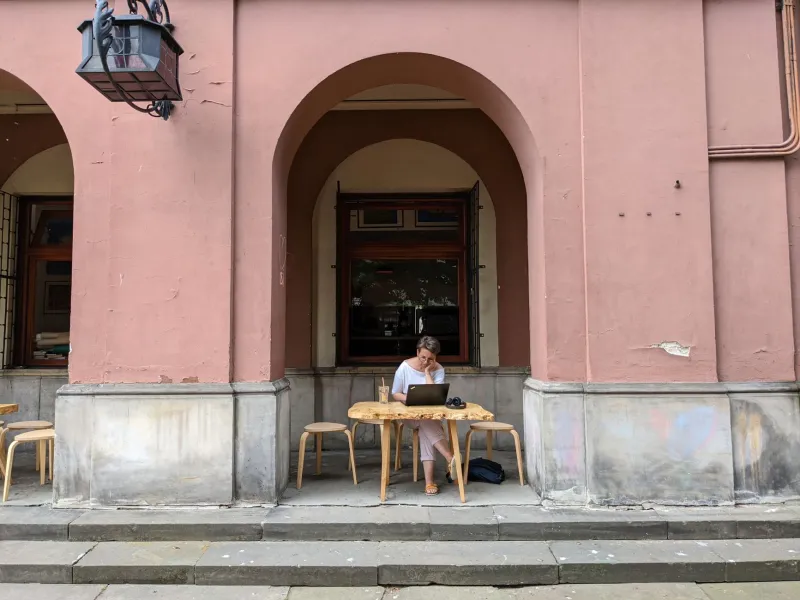
The story usually starts the same way. Someone quits a job, ends a lease, or survives a breakup. They decide six months abroad sounds like exactly the kind of reset they need. They tell their family it's temporary. They tell themselves the same thing.
Then six months becomes a year. The year becomes two. And somewhere in there, the return ticket stops feeling like a deadline and starts feeling like a question they're not sure they want to answer.
This isn't a rare phenomenon. Thousands of Americans every year end up living full, complicated, deeply rooted lives in countries they originally visited on a tourist visa. Some call it an accident. Others, with a little more reflection, call it the most intentional thing they ever did — even if they didn't know they were doing it.
The Six-Month Lie We Tell Ourselves
There's something almost protective about framing a big move as temporary. Calling it a gap year or a sabbatical takes the pressure off. You're not abandoning your life — you're just pausing it. The lease back home is only sublet. The career is only on hold. The whole thing has an expiration date, which makes it feel safe.
But that framing also gives you permission to actually show up somewhere. When you're not performing the role of tourist — snapping photos, rushing landmarks, counting down days — you start to notice the texture of a place. You find a coffee shop where the owner learns your order. You get invited to a neighbor's dinner. You start dreaming in a second language before you even realize you're learning one.
That's usually when the shift happens. Not dramatically. Not with a single moment of clarity. Just a slow, creeping realization that you've stopped counting down and started counting in.
What Actually Makes People Stay
Ask a dozen accidental expats why they never left, and you'll get a dozen different answers. But a few themes come up again and again.
The job that wasn't supposed to exist. Plenty of Americans head abroad with savings and a vague plan to freelance or teach English for a few months. Then a local company makes an offer. Or a client in that city turns into a full-time role. Suddenly the resume has an international address on it, and leaving would mean starting over — which, at a certain point, feels like the bigger risk.
The person who was never part of the plan. Romance is one of the oldest reasons people plant roots somewhere unexpected, and it's still one of the most common. A relationship that starts as a casual thing during a short stay has a way of complicating the departure timeline. Visa applications start to look less like bureaucracy and more like a logical next step.
The version of themselves they found there. This one is harder to explain but probably the most honest. Some people discover that who they are in another country — unburdened by old expectations, freed from the social scripts they grew up with — feels more like their actual self than the person they were back home. That's not something you just walk away from.
The Guilt Trip Back to the States
Staying doesn't come without cost. One of the most consistent things accidental expats describe is the complicated relationship with home — and with the people they left behind.
Holiday visits become logistically exhausting and emotionally loaded. Parents ask when you're coming back, and you've stopped having a good answer. Friends who stayed on the expected path — mortgage, kids, the whole American checklist — start to feel like they're living in a parallel timeline you stepped out of.
And then there's the guilt. American culture doesn't have a great framework for the person who left and actually liked it. We celebrate the expat adventure in theory but tend to treat permanent departure as a mild betrayal in practice. Like you're saying something unflattering about home by choosing not to return to it.
Most people who've made the leap say you learn to sit with that discomfort. You find a way to hold two homes at once — even if one of them is three time zones away and the other no longer quite fits.
What a Place Has to Offer That a Vacation Never Can
There's a fundamental difference between experiencing a place and inhabiting it. Tourism, even the most adventurous kind, is still a kind of performance. You're the audience and the subject simultaneously, moving through someone else's daily life while yours waits on pause back home.
Actually living somewhere — paying rent, navigating bureaucracy, arguing about the utility bill in a second language — strips all of that away. What you're left with is just the place, unfiltered. Its rhythms and frustrations and small ordinary joys. The way the light falls on a particular street at a particular hour. The seasonal shifts nobody puts on a travel brochure.
That's what accidental expats often say they couldn't give up. Not the adventure of being somewhere new — that wears off faster than you'd think — but the specific, irreplaceable texture of a life built somewhere unexpected.
The Question Nobody Asks Before They Go
Most people planning a stint abroad ask the practical questions. What's the cost of living? Is the Wi-Fi reliable? Do I need a visa? How far is the nearest American-style grocery store?
Very few ask the question that actually matters: What if I like it too much to leave?
It sounds like a nice problem to have. And it is. But it's also a real one — with real implications for careers, relationships, family obligations, and the version of the future you thought you were working toward.
The Americans who never came back didn't plan for any of it. They just showed up somewhere, gave it an honest chance, and found out that belonging isn't always where you expect to find it.
Sometimes the carry-on you packed for six months turns out to be all you ever needed. You just didn't know where you were going yet.