What Happens After You Get the Other Passport
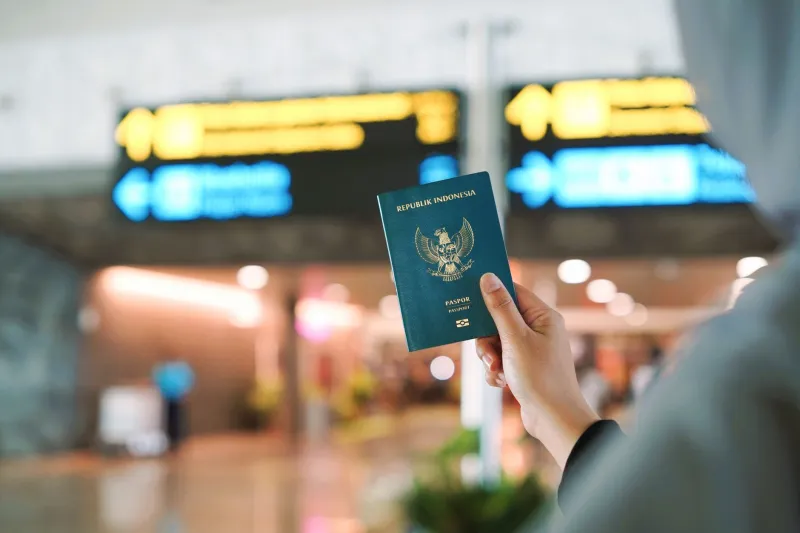
The envelope arrived on a Tuesday. Inside was a document that had taken four years, three sets of paperwork, two visits to a consulate, one lawyer, and more fees than she cared to total up. It was, officially, proof of Italian citizenship. She was, officially, a dual citizen of the United States and Italy.
She expected to feel triumphant. Instead, she sat at her kitchen table in Rome and felt something she hadn't anticipated: a quiet, unsettling shift in how she understood herself.
"I thought it would feel like an arrival," she said. "It felt more like a question."
This is the part of the dual citizenship story that doesn't make it into the lifestyle blog posts. The part that comes after the paperwork, after the oath or the ceremony or the quiet bureaucratic finality of a stamp in a new document. The part where you realize that holding two passports doesn't mean you fully belong to either country — it means you've permanently complicated your relationship with both.
Why Americans Pursue Second Citizenship in the First Place
The reasons are as varied as the people who do it, but a few themes come up consistently.
For some, it's heritage — the long-delayed completion of a connection to a country their grandparents left behind. Italy, Ireland, Poland, Germany, and Portugal have relatively accessible ancestry-based citizenship programs, and Americans with the right lineage and the patience for genealogical paperwork have been pursuing these routes in growing numbers. The pandemic years, in particular, saw a significant uptick in Americans investigating what citizenship options they might have inherited without realizing it.
For others, it's practical. A European passport opens the entire EU for work and residency. A Panamanian residency program offers tax advantages. A Uruguayan citizenship application is famously straightforward. For remote workers, entrepreneurs, and retirees, a second legal status abroad isn't just a romantic gesture — it's a strategic one.
And for some, it's emotional. They moved abroad, fell in love with a place, built a life there, and reached a point where getting permanent status felt less like a choice and more like the natural conclusion of who they'd become.
The Bureaucracy Nobody Warns You About
Everyone who has gone through the process has a paperwork story. Usually several.
One man who pursued Portuguese citizenship after five years of residency described the experience as "a full-time job that paid nothing and charged everything." Documents had to be apostilled. Translations had to be certified. Appointments were scheduled months out and occasionally cancelled without notice. Forms that were accepted one year were revised the next.
"The Portuguese bureaucracy is legendary," he said, not entirely unkindly. "There's a word they use — desenrascanço — which roughly means the ability to improvise your way out of a complicated situation. I think it exists because the bureaucracy requires it."
The American tax dimension adds another layer of complexity that catches many people off guard. The United States is one of only two countries in the world that taxes its citizens on worldwide income regardless of where they live. Gaining citizenship abroad doesn't change this. Americans who become dual citizens still file US taxes, still report foreign bank accounts, and still navigate the Foreign Bank Account Report (FBAR) requirements that trip up even financially sophisticated expats.
For some people, this complexity becomes the deciding factor in whether to formally renounce US citizenship — a step that's irreversible, emotionally loaded, and more common than most Americans realize.
The Moment It Stops Feeling Like a Visit
There's a specific psychological threshold that dual citizens and long-term residents describe — a moment when the country they moved to stops feeling like an extended adventure and starts feeling like their actual life.
It's different for everyone. For one woman in Barcelona, it was the moment she found herself giving directions to a tourist and realized she knew every shortcut without thinking. For a man who'd spent six years in New Zealand, it was when his daughter started school and he understood, viscerally, that her formative years were going to be shaped by this place rather than the one he grew up in.
"I stopped being a person who lives in New Zealand," he said, "and became a person who is from New Zealand. My kid is from New Zealand. That's not reversible."
This transition — from resident to someone who genuinely belongs — is what the second passport represents at its most meaningful. It's not just a travel document. It's a declaration about where your life is rooted.
What You Lose (That You Didn't Expect to Lose)
The losses are subtle and they accumulate slowly.
You lose the easy shorthand of being simply American. In the US, that identity is a given — it requires no explanation, no defense, no negotiation. Abroad, especially once you've gained local status, you exist in a more ambiguous space. You're not quite the expat anymore, but you're not quite a local either. You're something harder to categorize.
You lose the clean narrative of home. Americans who've been abroad long enough start to find, when they return to visit, that the country has changed in their absence — and more disorienting, that they've changed in ways that make the familiar feel slightly foreign. The reverse culture shock is real and it doesn't get easier with time; it just becomes more familiar as a feeling.
And some people, eventually, lose the certainty that they made the right choice. Not because the life they built abroad is bad — often it's genuinely wonderful — but because the choice was real and real choices have costs, and those costs sometimes surface years later in unexpected ways.
What You Find Instead
And yet. Ask the same people whether they'd do it again and the answer is almost universally yes.
What they find, on the other side of the paperwork and the identity confusion and the complicated tax returns, is something that's difficult to acquire any other way: a genuinely expanded sense of what's possible. Having lived fully inside another country — not as a tourist, not as a temporary resident with one foot already on the plane home, but as someone with legal standing and a life built there — changes the scale of your imagination.
You stop assuming that the way things work at home is the only way things can work. You stop taking for granted the systems and values you were raised inside. You gain, as one dual citizen put it, "the ability to see both countries like an outsider, which is uncomfortable and also the most useful thing that's ever happened to me."
The second passport is, in the end, less about travel convenience than it is about this: a permanent, documented reminder that you chose to belong somewhere, that belonging is a choice, and that the world is larger than any single country's version of it.