Your Ancestors Left a Trail — Here's What Happens When You Actually Follow It
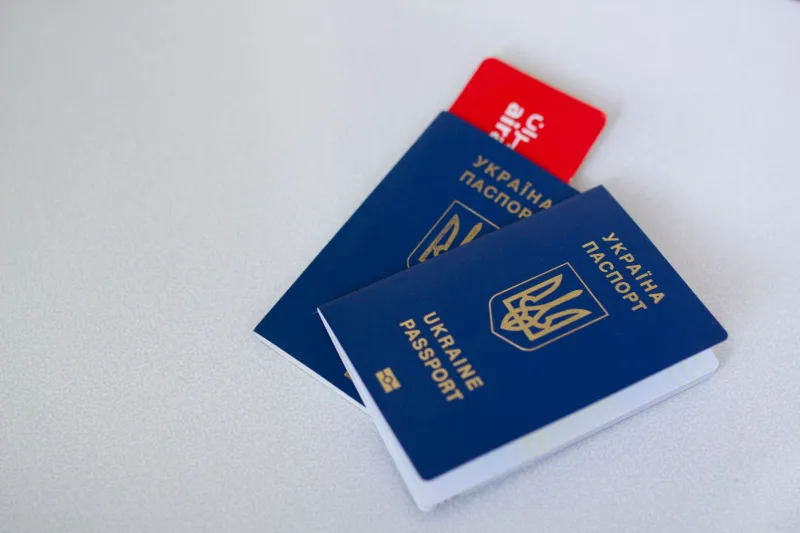
Somewhere in a shoebox, a filing cabinet, or a faded memory your grandmother shared exactly once, there's a clue. A last name that got shortened at Ellis Island. A town in Sicily nobody's visited in four generations. A photograph of a man in a suit standing in front of a building that no longer exists. Most of us look at that clue, feel something vague and warm, and then go back to our lives.
But some people book a flight.
And what they find on the other end of that flight is almost never what they expected.
It's Not the Same as Ancestry Tourism
Let's be clear about something: retracing your family's migration story is a fundamentally different experience than ticking a heritage box on a guided tour. It's not about posing in front of a castle because the brochure says your surname might be connected to it. It's messier, slower, and a lot more personal than that.
The people who do this seriously — and there are more of them every year — aren't just visiting a country of origin. They're following a sequence of decisions their ancestors made under pressure. They're standing in the port city where a great-great-grandmother waited three weeks for a ship. They're walking through the neighborhood in Chicago or Pittsburgh or New Orleans where that same woman first heard English spoken and had absolutely no idea what anyone was saying.
That's a different kind of travel. That's a conversation with history that happens to involve your own bloodline.
The Secrets Nobody Warned You About
Here's the thing nobody tells you before you start digging: you will almost certainly find something surprising. Not necessarily something dark, though sometimes it is that. But surprising.
Americans who've undertaken these journeys talk about discovering that their family's "Irish village" was actually a small town with a complicated relationship to the English landlord system — and that the reason their ancestors left wasn't just famine, it was something more specific and more painful. Others find out their Mexican grandfather's hometown sits in a region with a deep Indigenous history that was never once mentioned at the dinner table. Some people show up in a Polish village expecting to find a graveyard and instead find a distant cousin who still farms the same land.
One woman from Ohio traced her family's route from a small town in Calabria, through Naples, across the Atlantic, and into a tenement building in lower Manhattan that's now a boutique hotel. She stood in the lobby and tried to imagine seven people sharing a single room. She said later that it completely recalibrated how she thought about her own complaints.
That's what this kind of travel does. It recalibrates things.
The Route Matters as Much as the Destination
Most heritage travelers make a beeline for the ancestral village and call it done. But the migration route itself — the stops along the way, the ports of departure, the transit cities — is where a lot of the real story lives.
If your family came through Bremen or Hamburg or Le Havre before crossing the Atlantic, those cities have their own chapters in your family's story. The holding areas, the medical inspections, the bureaucratic hoops that determined who got through and who got sent back — all of that happened somewhere specific. Some of those places are now museums. Some are apartment buildings. Some are parking lots. But standing in them still does something to you.
And on the American side, the first neighborhoods matter just as much as the villages left behind. The corner of a city where your great-grandparents first rented a room, where they found work, where they attended a church service in their own language because English was still impossible — those corners are still there, even if the neighborhood looks completely different now. Walking them is its own kind of archaeology.
How to Actually Start
This is where people get stuck, so let's be practical for a second.
Start with what you already have. Old documents, naturalization papers, ship manifests — these are more accessible than most people realize. The Ellis Island database is free and searchable. Ancestry.com and FamilySearch have digitized enormous amounts of records that used to require a trip to a foreign archive. Even a name and a rough decade can get you surprisingly far.
Then talk to the oldest people in your family before it's too late. Ask specific questions. Not just "where did we come from" but "what did they say about why they left" and "did anyone ever go back" and "what did they bring with them." The answers are often more specific and more interesting than you'd expect.
Once you have a rough route, start looking for local historians and genealogical societies at each stop. Many small towns in Europe, Latin America, and elsewhere have volunteers who are genuinely excited to help Americans trace their roots — partly because they find it interesting, and partly because the descendants of emigrants are a living connection to their own local history.
What You'll Bring Back
People who do this kind of travel don't come back with the same things they left with. That's not a metaphor about luggage — it's about the way the trip rearranges something internal.
Some come back with a much clearer sense of why their family is the way it is. The silence around certain topics. The particular kind of stubbornness. The way food was treated as something sacred. When you see what your ancestors survived and what they left behind to survive it, the family patterns start to make a different kind of sense.
Some come back with actual relationships — distant cousins who've been tending a family grave for decades, waiting for someone from the American branch to show up. That happens more often than you'd think.
And some come back simply humbled. Because the journey your ancestors made — often with nothing, often without any certainty about what waited on the other end — was genuinely hard. Tracing it, even in comfort, with a return ticket already booked, gives you a small and imperfect sense of what it cost.
That's not nothing. In fact, it might be one of the best reasons to travel there is.