They Showed Up With a Return Ticket and Never Used It
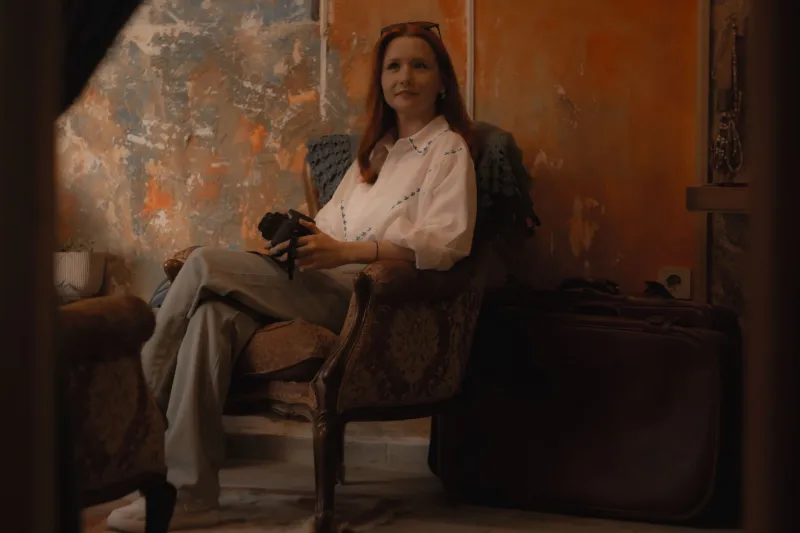
Katie Ostrowski booked her flight to Porto with exactly 28 days of vacation time, a mild sense of burnout, and zero intention of doing anything dramatic. She had a lease back in Austin. A storage unit full of furniture. A job she'd technically put on pause, not quit.
That was three years ago.
"I keep telling people I'm still figuring it out," she laughs, sitting in the apartment she now rents in a neighborhood she once couldn't pronounce. "But at some point, 'figuring it out' just became my life."
Katie isn't unusual. Not anymore. Across travel forums, expat Facebook groups, and the comment sections of visa blogs, you'll find hundreds of Americans telling some version of the same story: they arrived somewhere for a few weeks, something shifted, and the return ticket quietly expired.
The Month That Stretches
There's a specific kind of magic that happens around day three in a new place — the moment when the disorientation softens and the city starts to feel less like a backdrop and more like a place where actual people live. For most travelers, that feeling is a highlight reel. For accidental expats, it becomes a question.
What if I just... stayed?
For Marcus Webb, a former marketing manager from Philadelphia, that question hit him somewhere on a scooter in Bali. He'd taken a three-week trip after leaving a job he'd held for six years. The plan was to decompress, then figure out next steps back home. But by week two, he'd found a co-working space, made friends with a handful of other remote workers, and started cooking his own meals in a rented villa that cost less per month than his Philadelphia parking spot.
"The math stopped making sense," he says. "Not just financially, though that was a big part of it. It was more like — I kept asking myself what I was going back for. And I couldn't come up with a great answer."
He extended his stay. Then extended it again. He's been in Southeast Asia for two years, splitting time between Bali and Chiang Mai, and he's started consulting work that keeps him solvent and, for the first time in his adult life, genuinely interested in what he does every day.
The Visa Maze Nobody Warns You About
Staying somewhere you only meant to visit for a month isn't just an emotional decision — it's a logistical one, and it gets complicated fast.
Most Americans enter foreign countries on tourist visas or visa-free arrangements that max out at 30 to 90 days. Stretching beyond that means navigating a maze of options: digital nomad visas (now offered by Portugal, Costa Rica, Croatia, and others), long-stay visas that require proof of income, visa runs to neighboring countries, or in some cases, just winging it and hoping for the best — which, to be clear, is not a strategy anyone should rely on.
Jessica Park, who ended up staying in Mexico City after a solo trip that was supposed to last three weeks, spent her first six months doing monthly border crossings into Texas before eventually applying for a temporary residency permit.
"It's genuinely not that hard if you do your research," she says, "but nobody hands you a roadmap. You're kind of reverse-engineering the life you already started living."
For Americans considering a similar pivot, organizations like Nomad List and Expat.com have become go-to resources, and immigration lawyers who specialize in expat cases have seen a surge in clients who describe their situation the same way: I didn't plan this. I just didn't leave.
When Home Becomes a Complicated Word
The practical stuff — the visas, the bank accounts, the time zones — is actually the easier part. The harder part is identity.
Americans abroad occupy a strange middle space. They're not tourists, but they're not immigrants in the traditional sense either. They didn't flee anything. They didn't arrive with a five-year plan. They just... stayed. And over time, that staying reshapes how they see themselves and, often, how they see the country they came from.
"I'm more American than I've ever been, in a weird way," says Marcus. "Because now I notice what's actually American about me. The way I approach work. The way I talk to strangers. The stuff I miss — which is specific and kind of random. Good diner coffee. The Fourth of July. College football."
Katie echoes something similar. She still votes in US elections. She still texts her mom every day. But she's also started to feel the pull of the place she landed in — its rhythms, its food, its particular way of moving through time.
"Portugal has this thing," she says, searching for the word. "Saudade. It's like a longing for something you love, even when it's right in front of you. I think I understand that now. I feel it about both places."
What the Accidental Life Actually Looks Like
It would be easy to romanticize all of this — and travel media, including us, can be guilty of that. The reality of staying somewhere you only meant to visit includes some genuinely hard stuff: relationships that strain under distance, careers that require creative reinvention, and a recurring low-grade anxiety about whether you're building something real or just postponing decisions.
But the people who've done it tend to describe a specific kind of clarity that came from the disruption. The way a temporary situation forces you to examine what you actually need versus what you've simply accumulated. The way starting from scratch — even accidentally — can reveal capacities you didn't know you had.
Jessica, now two years into her Mexico City life, put it this way: "I came here for three weeks and thought I was taking a break from my life. Turns out I was starting it."
Could It Happen to You?
Maybe you've felt it — that pull at the end of a trip, that reluctance to head back to the airport. Most of us board the plane anyway. We have things to get back to. Responsibilities. Routines. A life that's already assembled and waiting.
But some people don't board the plane. Or they do, eventually, and then spend the next year quietly plotting their return.
If you've ever extended a trip by a few days just because you couldn't stand to leave — you already understand the instinct. The accidental expats of the world just took it a little further.
They showed up with a return ticket.
They just never used it.