Forget the Eiffel Tower: Why Smart Travelers Are Building Trips Around What Locals Actually Love

Photo by Photo by Quang Tran on Unsplash on Unsplash
Here's a question worth sitting with before your next trip: When was the last time you stood in a massive crowd, phone raised above your head, waiting for your turn to photograph something you'd already seen a thousand times online — and felt genuinely moved by it?
For a lot of American travelers, that honest answer is: not recently. And something about that answer is starting to change behavior in a real way.
There's a quiet but growing movement happening among people who love to travel. They're not quitting tourism — they're just quietly firing the checklist.
What the Reverse Bucket List Actually Means
Forget the name for a second. The concept is simple: instead of building a trip around the landmarks everyone tells you to see, you build it around the question what would I actually do here if nobody expected anything of me?
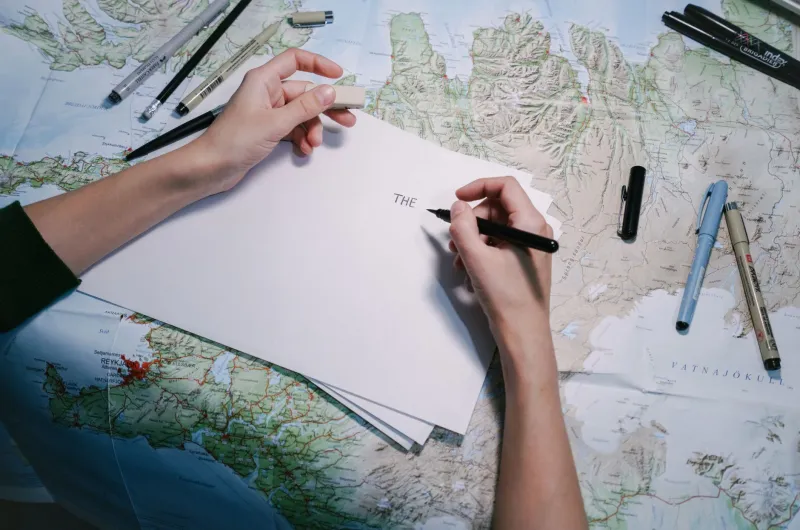
No Colosseum. No Times Square. No Sagrada Família unless it genuinely calls to you. Instead — the neighborhood market a local mentioned once in passing. The bar that doesn't have a sign out front. The beach that doesn't show up until page four of search results because it hasn't been "discovered" yet.
It sounds almost too casual to be a real travel philosophy. But ask anyone who's tried it, and they'll tell you: the stories you come home with are completely different. Richer, weirder, more yours.
The Problem With the Greatest Hits
Let's be fair — a lot of iconic landmarks are iconic for good reason. The Grand Canyon will genuinely take your breath away. Kyoto in cherry blossom season is every bit as beautiful as advertised. Nobody's saying the famous stuff is overrated.
But there's a difference between experiencing something and processing something through a crowd of 3,000 other people who are also trying to experience it.
When you spend two hours waiting in line to see a painting you've memorized from art history class, then shuffle past it in roughly forty-five seconds before the next group pushes through — did you actually see it? Or did you check it off?
That distinction matters more than people admit. And once you start noticing it, you can't un-notice it.
What Happens When You Ask Different Questions
The travelers who've leaned into the reverse bucket list approach tend to describe a shift that starts with changing the questions they ask before and during a trip.
Instead of what are the top ten things to do in Lisbon, they ask where do people in this neighborhood actually eat on a Tuesday night? Instead of what's the best view of the city, they ask where would you take someone you were trying to impress?
Those questions open completely different doors.
One traveler from Nashville described spending a week in Mexico City and deliberately skipping Teotihuacán — the ancient pyramid complex that shows up on essentially every itinerary for the city. Instead, she spent an afternoon in a working-class neighborhood in Iztapalapa following a lead from her Airbnb host about a woman who'd been making the same style of mole for forty years out of her home kitchen. She ended up staying for dinner. She came home with a handwritten recipe she still can't fully translate and a story she's told at least a hundred times.
Another traveler, a guy from Portland who'd been to Tokyo twice before, decided on his third trip to skip Shibuya Crossing entirely. He'd seen it. He knew what it looked like. Instead, he spent that afternoon in a tiny neighborhood in Nerima-ku that almost no Western tourists visit, where he found a jazz bar the size of a walk-in closet and ended up having a four-hour conversation with a retired schoolteacher who'd been collecting American vinyl records since the 1970s.
"I've told that story more than any other story from all three Tokyo trips combined," he said. "And I almost didn't go because I felt guilty about skipping the famous stuff."
The Guilt Is Real — and Worth Pushing Through
That guilt deserves its own mention, because it's one of the most underrated barriers to this kind of travel.
There's a social pressure baked into tourism that most of us don't examine closely. You're supposed to see the Sistine Chapel if you go to Rome. You're supposed to do the Seine river cruise if you're in Paris. And when you come home, people are going to ask if you did those things — and there's a weird shame that comes with saying you didn't.
But here's the thing: nobody's going to interrogate you about whether you found that tiny ceramic workshop in Oaxaca or the old man selling the best torta you've ever eaten from a cart with no name. Those experiences are yours. They don't require justification.
The reverse bucket list is, in a lot of ways, a permission slip. Permission to travel for yourself instead of for the story you'll tell on social media.
How to Actually Do This
You don't need a radical overhaul of how you plan trips. A few small adjustments go a long way.
Talk to people who live there before you go. Not travel bloggers. Not TripAdvisor. Actual people. Local Facebook groups, Reddit threads for specific neighborhoods, or even just messaging someone who grew up in the city you're visiting. Ask them what they'd do with a free afternoon. The answers will surprise you.
Leave one full day completely unscheduled. Not as a rest day — as a wander day. Pick a neighborhood you have no reason to be in and just walk until something catches your attention. This sounds scary and it is, a little. It's also almost always the best day of the trip.
Follow food instead of sights. Food is the most honest expression of what a place actually values. Skip the restaurant with the photos of celebrities on the wall. Find the place where everyone inside is speaking the local language and nobody looks up when you walk in.
Ask 'what's boring here?' Seriously. Ask a local what's boring, what's normal, what they'd never think to show a visitor. That's usually exactly where you want to go.
The Souvenir You Can't Buy
Here's the real reason the reverse bucket list is spreading among American travelers who've been around the block a few times: the famous stuff gives you content. The overlooked stuff gives you experience.
Content is nice. But experience is what you carry home in the part of yourself that actually changes.
The world is full of places that aren't waiting to be photographed. They're just living. And the travelers who've learned to walk into that — without an agenda, without a checklist, without the pressure of a highlight reel — are coming back with something that's genuinely hard to describe.
Which is, honestly, exactly the point.