What Foreign Tourists See in America That Americans Have Completely Stopped Noticing
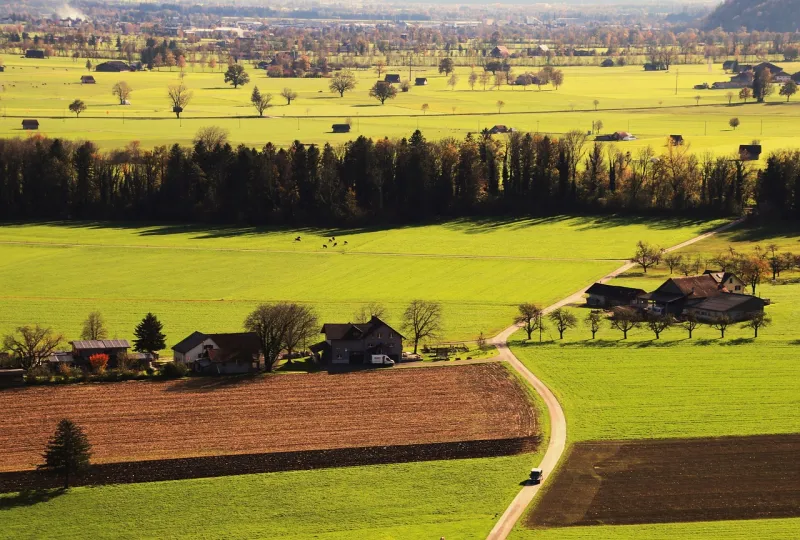
Photo: rural American roadside diner with vintage sign and pickup trucks outside, via cdn.pixabay.com
A travel blogger from Tokyo recently posted a photo that got a lot of attention in certain corners of the internet. It wasn't the Grand Canyon. It wasn't Las Vegas at night. It was a gas station in rural Mississippi — the kind with a hand-painted sign, a screen door, and a rack of pork rinds next to a bucket of live bait. Her caption read: "I have been waiting my whole life to see this exact place."
For most Americans, that gas station is invisible. It's a pit stop. It's Tuesday. But for a growing wave of international travelers, it's the whole point of the trip.
Something is shifting in the way the world looks at the United States as a travel destination — and it has almost nothing to do with the landmarks we've been selling for decades.
The Icons Were Never the Story
For a long time, the US marketed itself the way a greatest hits album works: Statue of Liberty, Grand Canyon, Golden Gate Bridge. Hit the highlights, check the boxes, fly home. That formula worked for a while, and it still fills hotel rooms in New York and San Francisco. But a different kind of international traveler has been quietly showing up lately — one who did the research, skipped the obvious stuff, and came specifically for something harder to explain.
They're coming for the roadside diners of the rural South. For the powwow circuits of the Great Plains. For the honky-tonks outside Nashville that the tourists inside Nashville never find. For the crawfish boils in Lafayette, Louisiana, where nobody is performing anything for anyone — it's just Sunday.
These travelers aren't lost. They're not here by accident. They planned this.
America as an Exotic Destination
It's a strange thing to sit with, especially if you grew up here. The idea that your country — with its strip malls and chain restaurants and interstate highway system — could register as exotic to someone feels almost absurd. But spend five minutes talking to an international visitor who just drove the Mississippi Delta Blues Trail, or spent a weekend at a small-town rodeo in Wyoming, and the absurdity starts to dissolve.
What they're responding to isn't the postcard version of America. It's the texture. The regional accents that shift every hundred miles. The way food changes not just state by state but county by county. The specific kind of light that hits the Ozarks in October. The fact that you can drive for six hours in one direction and feel like you've crossed an international border even though you haven't.
A couple from the Netherlands who spent three weeks driving through Appalachia described it this way: "We expected to feel like tourists. Instead, we kept feeling like we were being let in on something."
That's not a marketing line. That's a real reaction to a real place — one most Americans drive through on the way to somewhere else.
The Subcultures That Are Quietly Famous Everywhere But Here
Here's something that might genuinely surprise you: American subcultures have massive international fan bases that most Americans don't know exist.
Country music — not the pop-country version, but the older, rougher, Americana-rooted kind — draws devoted listeners from Germany, Japan, and Brazil who make pilgrimages to places like Bristol, Tennessee, or Bakersfield, California. Lowrider culture in the Southwest has a dedicated following in Scandinavia and the UK. The Gullah Geechee communities of coastal South Carolina and Georgia are on the cultural radar of historians and travelers from across Africa and the Caribbean who come specifically to trace a living thread of African heritage that survived in an American context.
Blues tourism in Mississippi is a genuine industry, but a significant portion of its visitors are European. They come because they understand — sometimes better than locals — that they're standing at the origin point of most modern popular music. It's a pilgrimage. And we built the church without fully realizing what it was.
What Their Perspective Reveals
There's something uncomfortable and clarifying about seeing your home through someone else's eyes. International visitors to the US often notice things that familiarity has made invisible to us — the sheer geographic variety, the depth of regional identity, the way certain communities have held onto traditions that the rest of the country left behind.
A food writer from South Korea spent two weeks eating her way through New Mexico and came back with an essay about the complexity of Hatch green chile culture — the harvest season, the roadside roasters, the way families stock up for the year, the quiet pride of a regional ingredient that hasn't been fully colonized by national food trends yet. She wasn't just writing about food. She was writing about belonging, and continuity, and the way a place can organize itself around something as specific as a pepper.
When was the last time someone from New Mexico wrote that essay?
That's not a criticism. It's just what happens when something becomes ordinary. The familiarity that makes a place feel like home is the same thing that makes it disappear from view.
The Destinations Hiding in Plain Sight
So where are these international travelers actually going? Beyond the obvious entry points, a few patterns are emerging:
The Mississippi Delta keeps showing up on international travel itineraries in a way that feels disproportionate to its domestic tourism profile. Clarksdale, Greenville, the stretch of Highway 61 that runs through it all — these places are well-known in blues circles worldwide and largely overlooked by American travelers who aren't already fans.
The Texas Hill Country draws a surprisingly large number of German visitors, partly because of the region's German immigrant history and partly because the landscape — cedar hills, spring-fed rivers, small towns with old-world architecture — genuinely delivers something unexpected.
The Gullah Geechee Corridor along the Georgia and South Carolina coast is gaining international attention as a site of living cultural heritage, not just history.
Small-town rodeo culture across Montana, Wyoming, and the rural Southwest attracts travelers from countries where cowboys exist only as mythology. Showing up at a local rodeo where nobody's performing for outsiders — where it's just the actual thing — is apparently a profound experience.
The Takeaway for the Rest of Us
You don't have to fly to the other side of the world to have your perspective rearranged. Sometimes it just takes borrowing the eyes of someone who crossed an ocean to see what you've been walking past your whole life.
The international visitors coming to these overlooked corners of America aren't doing it because they couldn't afford Paris. They're doing it because they did the research, and the research led them here — to the gas station in Mississippi, to the chile roaster in New Mexico, to the honky-tonk outside Nashville that doesn't have a sign.
Maybe the better question isn't why they're coming. Maybe it's why we stopped going.